
The numbers are in for February 2026 and the Smoky Mountain real estate market has a story worth understanding.
Compared to this same period in 2025, the data shows a market with more activity, more inventory, and some meaningful shifts in pricing.
For buyers, sellers, and investors, that combination creates a different set of conversations than we were having a year ago. We have been working in these mountains since 1996, and one thing we know is that the market always has nuance. Here is what the data is showing us right now.
Transaction Volume Is Up, While Average Prices Have Adjusted
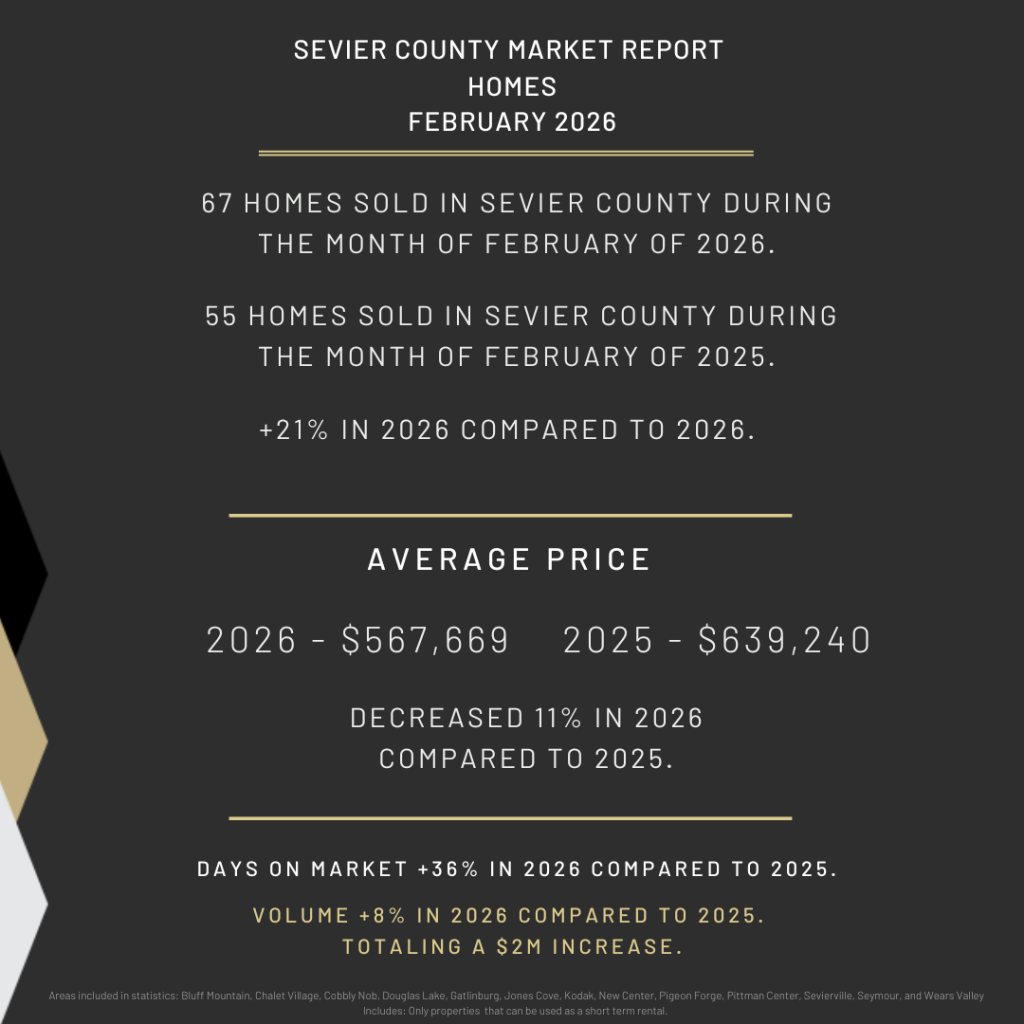
The total number of closed sales climbed 22 percent, from 55 transactions in February 2025 to 67 in February 2026.
More properties are changing hands, which reflects continued demand for Smoky Mountain real estate.
At the same time, average prices have come down about 11 percent, from $639,000 to $567,000.
Price per square foot dropped a more modest 5 percent, from $335 to $318.
While the headline number looks significant, buyers are not getting dramatically less property for their money.
They are finding more reasonably priced opportunities in a market that has recalibrated from the elevated prices of the past few years. Overall sales volume still grew 8 percent to just over $38 million, which reflects a market that remains active.
Cabins and Single Family Homes: Sales Are Strong, But Patience Matters
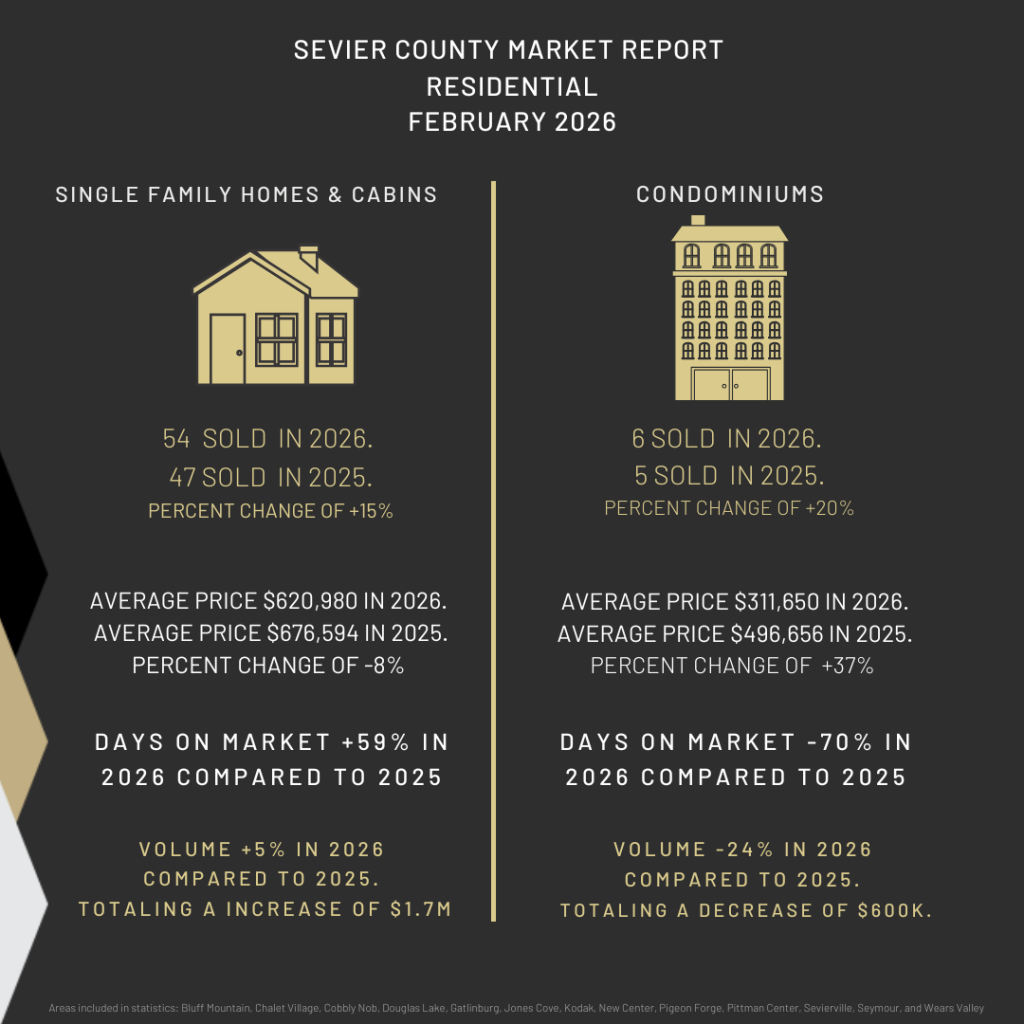
Cabins and single family homes are the core of this market, and sales rose 15 percent year over year, from 47 to 54 closed transactions. Buyer interest in this category has not faded.
Average prices in this segment came down about 8 percent, landing at $620,980 compared to $676,594 last year.
Price per square foot slipped from $343 to $324, a 6 percent change.
The figure that deserves the most attention is Days on Market, which increased 59 percent, from 75 days to 119 days. Properties are taking longer to go under contract.
For sellers, that is a clear signal that pricing and presentation are carrying more weight than they did 12 to 18 months ago.
For buyers, it means more time to evaluate options and negotiate terms. If you are considering listing a property, we can walk you through what it takes to position it well in this environment.
Condos: Context Changes Everything
The condo numbers look dramatic at first glance, with average prices appearing to fall 37 percent from $496,656 in 2025 to $311,650 in 2026.
A single high end sale at Highlands of the Smokies, at $891,280, pulled the 2025 average well above where it would have landed otherwise. When you account for that outlier, the 2026 average is a much more accurate reflection of where the condo market is trading.
The number that stands out most in this segment is Days on Market, which fell 70 percent, from 105 days to 31 days.
Condos priced appropriately are moving quickly.
Land: Fewer Sales, Stronger Prices
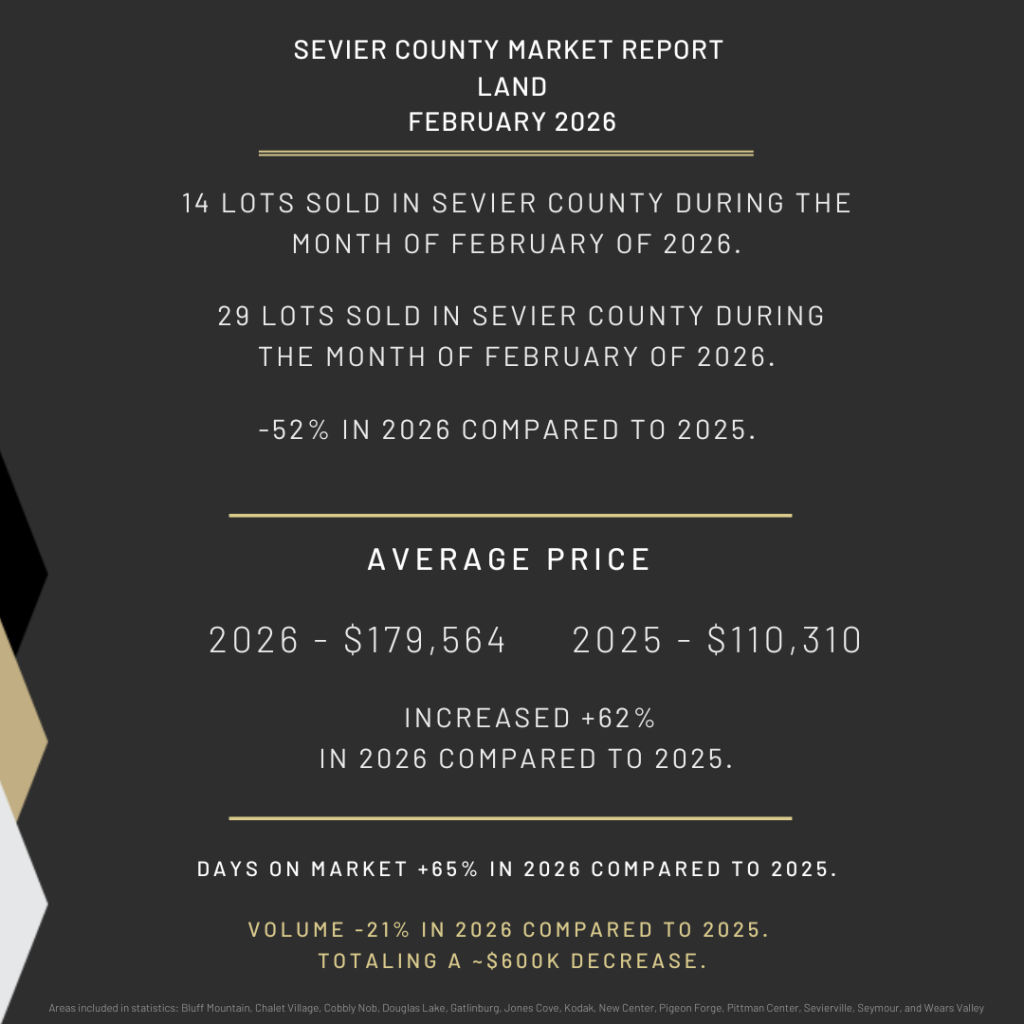
Land lot sales dropped sharply, down 52 percent from 29 transactions to 14. Fewer buyers are committing to raw land in the current environment.
The lots that are selling, however, are commanding notably higher prices, with the average rising 63 percent from $110,310 to $179,564.
The transactions happening now tend to involve more desirable, well located parcels.
Buyers are selective, and the properties meeting their standards are finding willing purchasers at strong prices. If you own land in a prime location and are weighing whether to sell, this is a conversation worth having sooner rather than later.
What This Means for Buyers and Investors
Smoky Mountain real estate is going through a period of price adjustment after several years of rapid appreciation.
More inventory, longer selling timelines, and more realistic pricing have shifted the balance toward buyers in most categories.
Sellers are not without leverage, but strategy matters more now than it did during the peak years.
For investors focused on short term rentals, the fundamentals of this market remain intact. The Smokies continue to draw millions of visitors each year, occupancy rates support strong rental income potential, and entry prices are more accessible than they were 18 months ago.
The question worth spending time on is which property, in which location, at what price point, managed in what way, will perform best for your specific goals.
That is the kind of analysis we do every day. We own short term rental properties in these mountains. We have built them, bought them, and sold them. We work with the management companies, know the local vendors, and understand the rates of return across different property types and price points. We bring that experience to every conversation we have with clients. If you are looking to buy or sell in the Smokies, we’d love to have a conversation with you.