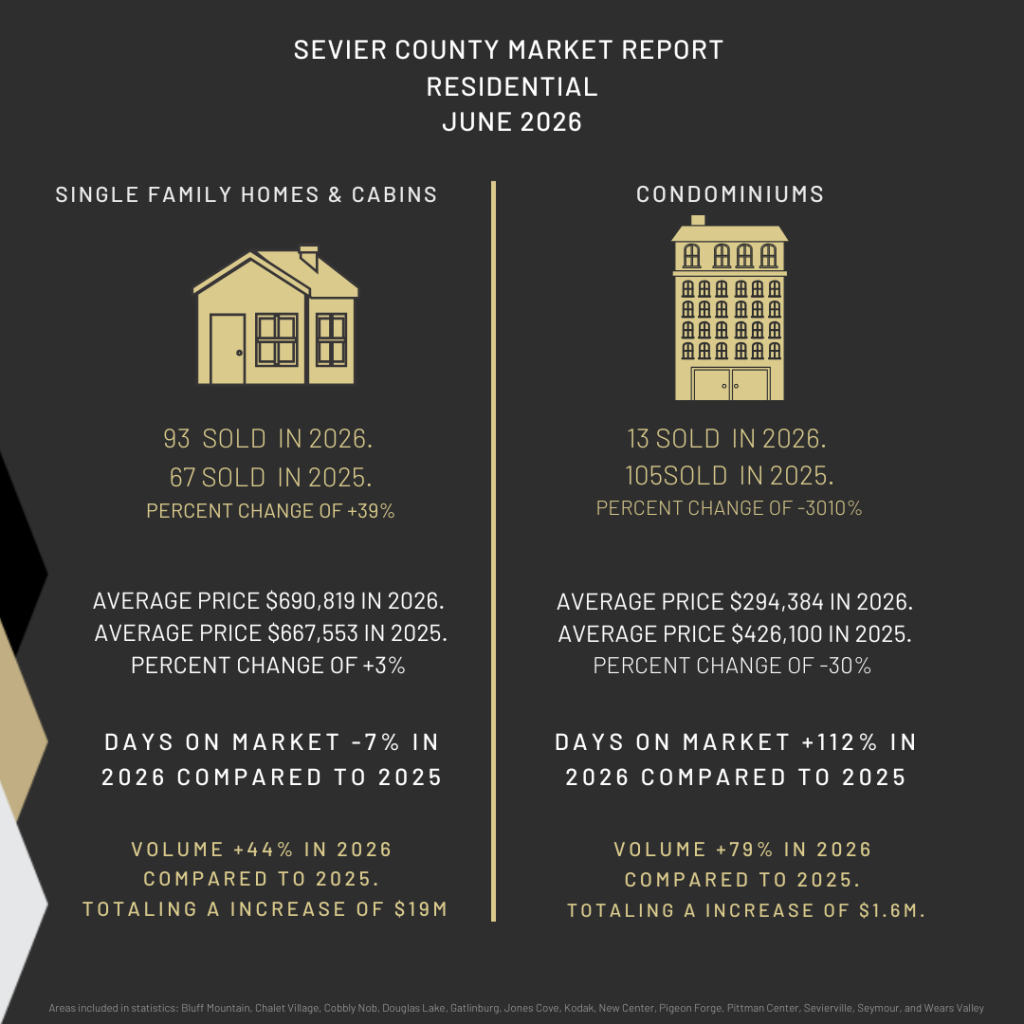
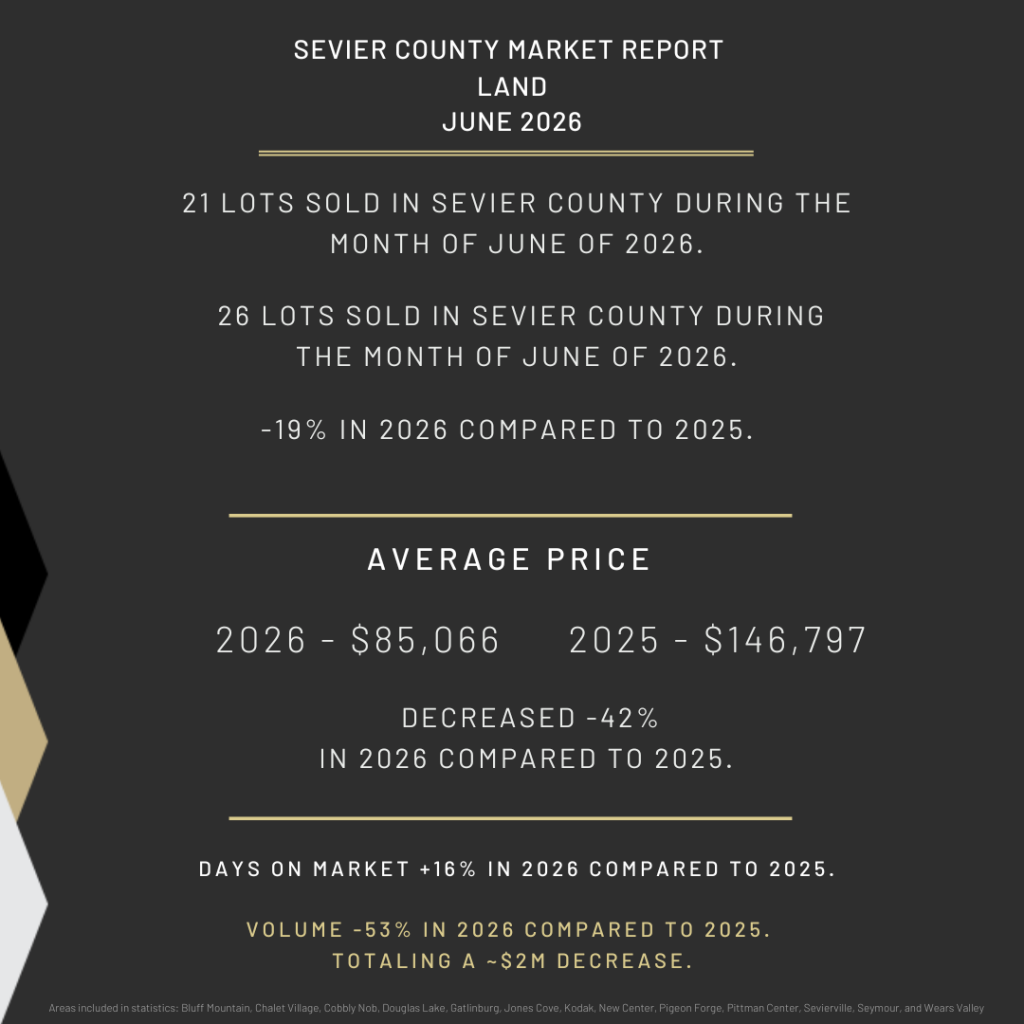
Smoky Mountain Real Estate: March 2026 Market Update

Each month we pull the numbers from across Sevier County and share what we are seeing on the ground. 

Here is what the data is telling us.


March 2026 vs. March 2025


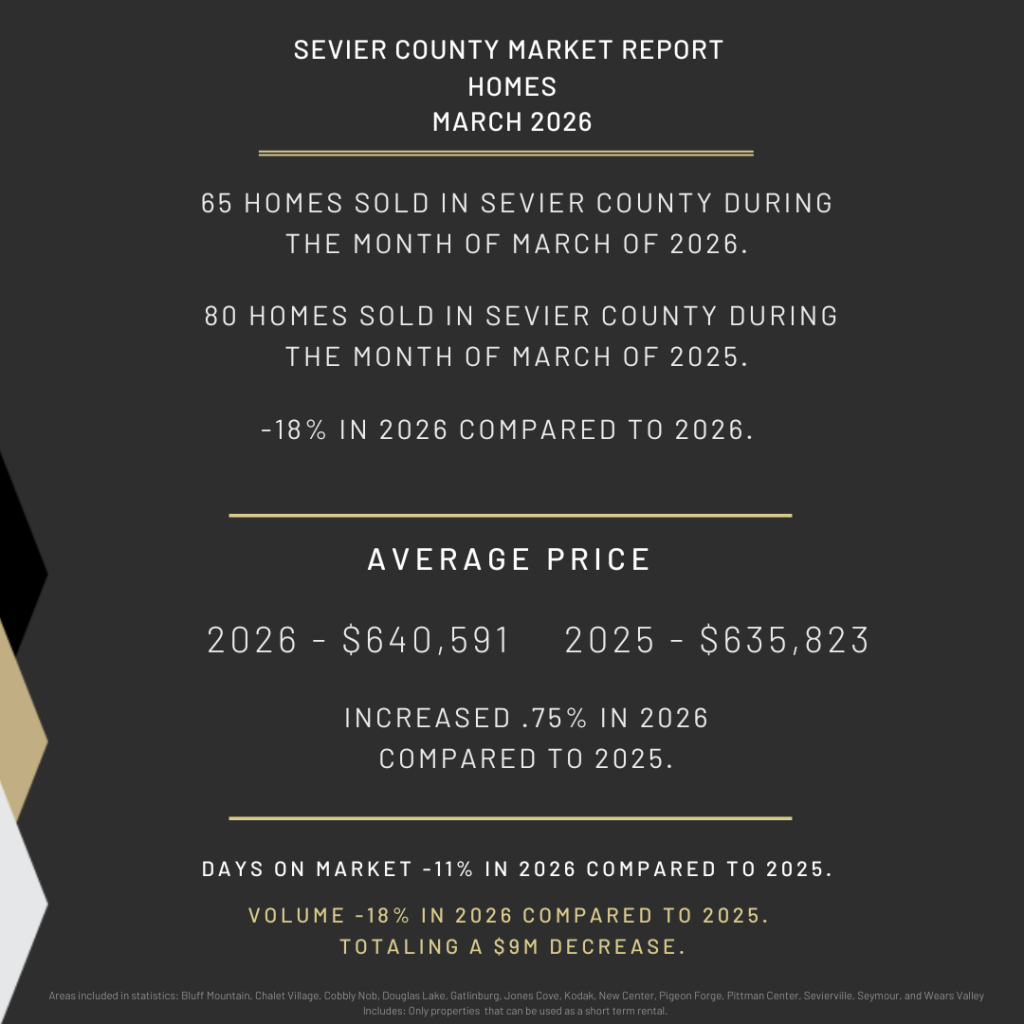
65 residential properties closed in March 2026, compared to 80 in March 2025. That is an 18.75% decrease in transaction count, and total volume fell 18% from $50.9 million to $41.6 million. 

Average sale price was $640,591, up 0.75% from $635,823 a year ago. 

Price per square foot rose 4%, from $340 to $353. 

Days on market improved 11%, falling from 71 days to 63. 

Fewer closings happened, but the properties that sold moved faster and at higher per-foot values than they did in March 2025. 

Prices are holding and buyer decisiveness is improving.


Single Family Homes and Cabins

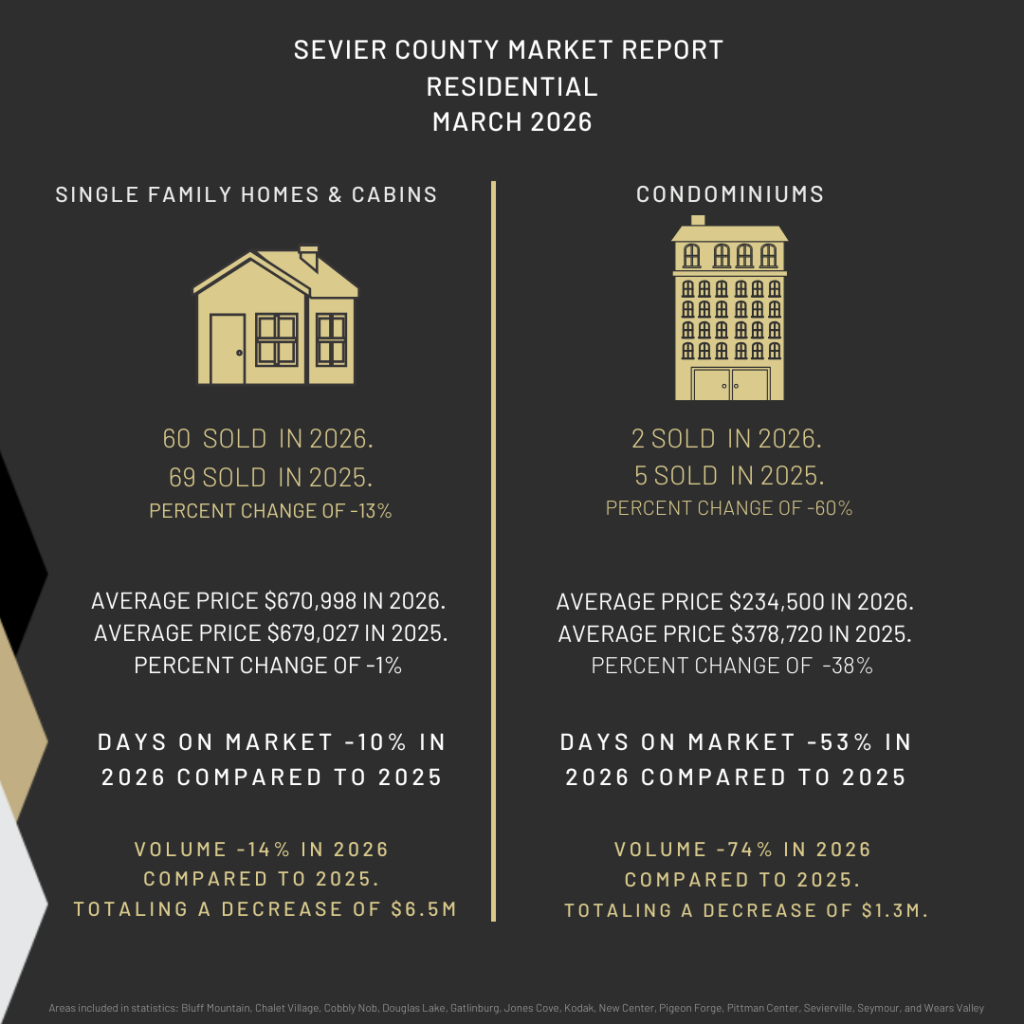
60 single family homes and cabins sold in March 2026, down 13% from 69 in March 2025. 

Average price came in at $670,998, a modest dip of 1.18% from $679,027 last year.

The number that stands out is price per square foot, which jumped 41% from $251 to $355. 

Buyers are not gravitating toward less expensive properties. They are purchasing more efficiently sized cabins at a higher per-foot premium. 

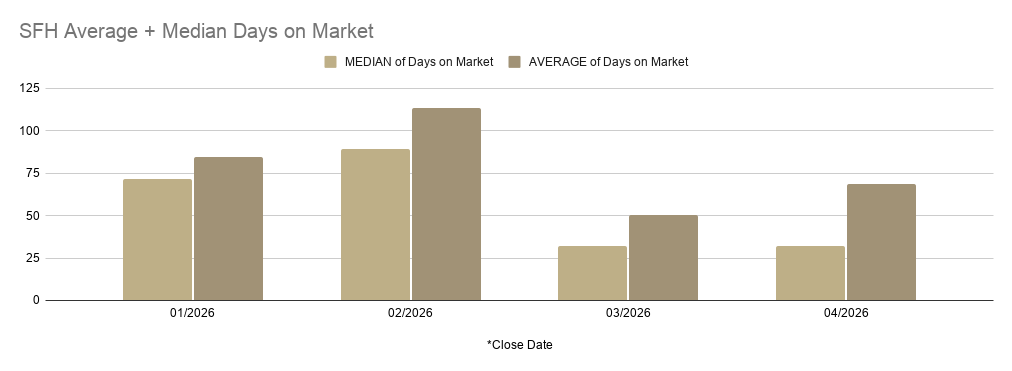
Days on market dropped 10% from 69 days to 62, meaning well-priced properties are not sitting.


Condos

Condo activity was limited in March 2026, with only 2 closings compared to 5 in March 2025. 

Average price fell to $234,500 from $378,720. With a sample this small, the percentage swings are difficult to read as a broader market trend.

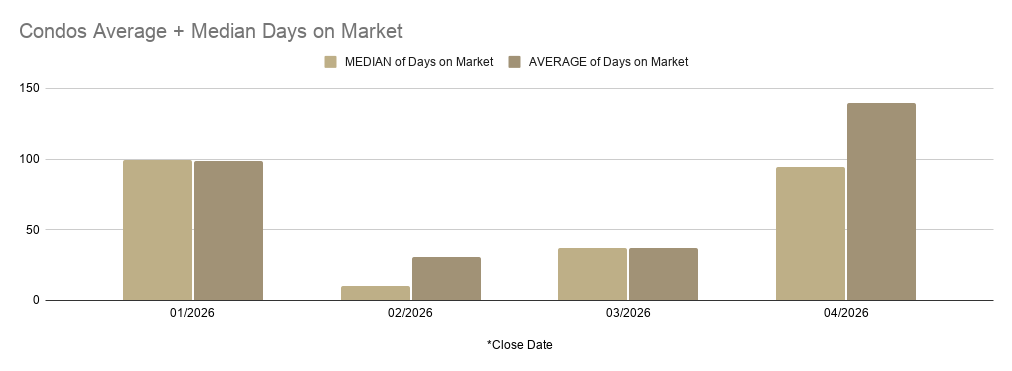
What is worth noting: price per square foot rose 16% to $311, and days on market compressed dramatically from 78 days to 37. 

The condos that sold moved fast and commanded more per foot than a year ago. 

We will be watching this segment closely as more closings accumulate through the spring.


Land

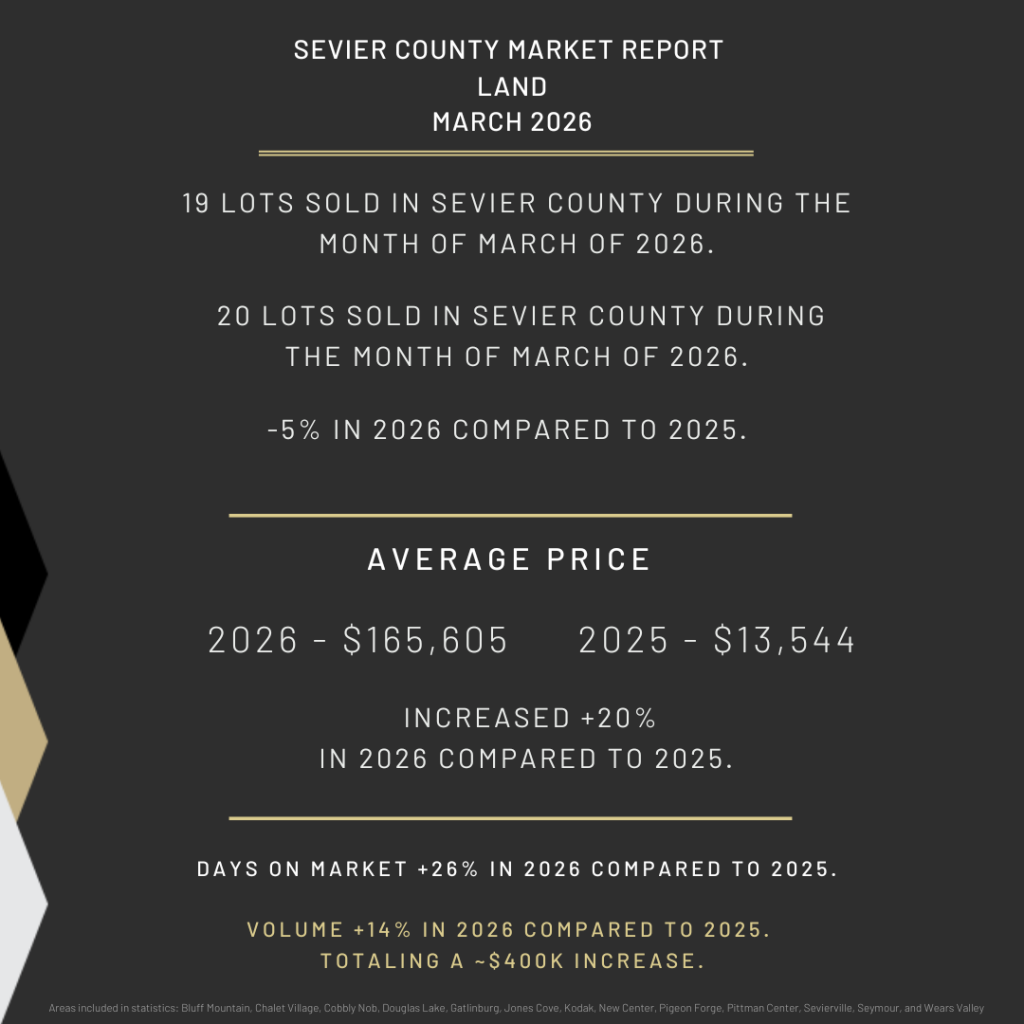
Land activity was nearly flat in transaction count, with 19 lots sold compared to 20 in March 2025. 

Average land price climbed 20.4% to $165,605 from $137,544, and total land volume grew 14% to $3.15 million.

The tradeoff is time. Days on market for land increased 26%, from 93 days to 117. Land buyers in the Smokies have always been deliberate, and that pattern holds. 

If you are considering purchasing or selling a lot, a strong pricing strategy from the start makes a meaningful difference in how long you wait.


How Q1 2026 Unfolded: January Through March

The month-by-month data from January through March 2026 tells an encouraging story about where the market is heading. 

Across nearly every metric, momentum built consistently through the quarter.

Residential closings grew from 51 in January to 67 in February and held steady at 65 in March. 

Average sale price climbed from $555,810 in January to $567,669 in February to $640,591 in March. 

Price per square foot followed the same arc, moving from $304 to $318 to $353 over those three months.

The most telling number may be days on market. Residential properties averaged 145 days on market in January. By February that fell to 103. By March it was 63. That kind of compression across a single quarter tells you that buyers who were cautious entering the year became significantly more decisive as spring approached.

Land closings also increased steadily, from 12 lots in January to 14 in February to 19 in March, with total land volume growing from $1.64 million to $2.51 million to $3.15 million.


What This Means for Buyers, Sellers, and Investors

The Q1 trend shows a market gaining confidence with each passing month. Those two things together point toward a promising spring season.

If you are a seller, accurate pricing is what separates a 62-day closing from a listing that lingers. 

If you are a buyer or investor, the window before peak summer demand is one of the better times to move thoughtfully. 

Contact the Jason White Team to schedule a consultation or explore current listings in Gatlinburg, Pigeon Forge, and Sevierville. If you are ready to take a serious look, we would love to be your guide.


Great Smoky Mountains: Still America’s Most Visited National Park and What It Means for Smoky Mountain Investors

Every spring, the National Park Service releases its annual visitation data. Every spring, the answer is the same: the Great Smoky Mountains National Park tops the list.

In 2025, the park welcomed 11,527,939 visitors, securing its position as the most visited national park in the United States by a wide margin. For context, Zion National Park came in second with just under 5 million visits. The Smokies drew more than twice that.

These numbers are exciting for anyone owning or considering a short-term rental property in Sevier County.


A gap that doesn’t close

The 2025 figures are part of a pattern that has held for years. The Smokies have exceeded 10 million annual visitors every year since 2014

Even in 2025, when overall National Park System visitation declined slightly to just over 323 million visits, the Smokies held strong at 11.5 million.

That consistency is what matters most for STR investors. Markets built on trend-driven demand are fragile and the Smokies are not that. 

The Great Smoky Mountains National Park draws families, couples, retirees, and school groups across every season, and the gateway communities of Gatlinburg, Pigeon Forge, and Sevierville have built an entire ecosystem of lodging, dining, and attractions around that demand.


*images courtesy of The NPS


Why the Smokies hold their audience year after year

Part of what makes this region unusual is that it doesn’t have an off season in the traditional sense.

Spring brings wildflowers and waterfall season.
Summer offers relief from heat elsewhere in the Southeast.
Fall transforms the ridgelines into color that draws visitors from across the country.
Winter brings a quiet beauty and the holiday energy of downtown Gatlinburg.

The park is also free to enter, which removes a barrier that limits visitation at other major parks.

It sits within a day’s drive of roughly one third of the U.S. population. For a family in Atlanta, Charlotte, or Columbus, it’s an accessible long weekend.


What the 2025 numbers signal for Short Term Rental Property owners

Across 2025, our market showed longer days on market and more selective buyers than the boom years of 2021 and 2022. But the fundamentals haven’t changed, demand for quality short-term rentals in this region remained steady because visitor flow remained steady.

Properties priced correctly and presented well continued to find buyers. The visitors driving that rental income kept arriving, 11.5 million of them, in 2025 alone.

For investors weighing where to place capital, that kind of consistent, deep demand is difficult to find. The Smokies are not dependent on a single employer, a single industry, or a single trend. They draw visitors because of what they are, and that doesn’t change with a rate cycle or a news cycle.

If you’re exploring a first investment in the Smokies or evaluating your current portfolio, we’d be happy to have a conversation. The Jason White Team has been working in this market since 1996, and we bring that experience to all our client conversations. 


A Closer Look at the Smoky Mountain Real Estate Market: February 2026 Sevier County Real Estate Market Statistics

The numbers are in for February 2026 and the Smoky Mountain real estate market has a story worth understanding.

Compared to this same period in 2025, the data shows a market with more activity, more inventory, and some meaningful shifts in pricing. 

For buyers, sellers, and investors, that combination creates a different set of conversations than we were having a year ago. We have been working in these mountains since 1996, and one thing we know is that the market always has nuance. Here is what the data is showing us right now.


Transaction Volume Is Up, While Average Prices Have Adjusted

The total number of closed sales climbed 22 percent, from 55 transactions in February 2025 to 67 in February 2026. 

More properties are changing hands, which reflects continued demand for Smoky Mountain real estate.

At the same time, average prices have come down about 11 percent, from $639,000 to $567,000.

Price per square foot dropped a more modest 5 percent, from $335 to $318. 

While the headline number looks significant, buyers are not getting dramatically less property for their money. 

They are finding more reasonably priced opportunities in a market that has recalibrated from the elevated prices of the past few years. Overall sales volume still grew 8 percent to just over $38 million, which reflects a market that remains active.


Cabins and Single Family Homes: Sales Are Strong, But Patience Matters

Cabins and single family homes are the core of this market, and sales rose 15 percent year over year, from 47 to 54 closed transactions. Buyer interest in this category has not faded.

Average prices in this segment came down about 8 percent, landing at $620,980 compared to $676,594 last year. 

Price per square foot slipped from $343 to $324, a 6 percent change. 

The figure that deserves the most attention is Days on Market, which increased 59 percent, from 75 days to 119 days. Properties are taking longer to go under contract. 

For sellers, that is a clear signal that pricing and presentation are carrying more weight than they did 12 to 18 months ago.

For buyers, it means more time to evaluate options and negotiate terms. If you are considering listing a property, we can walk you through what it takes to position it well in this environment.


Condos: Context Changes Everything

The condo numbers look dramatic at first glance, with average prices appearing to fall 37 percent from $496,656 in 2025 to $311,650 in 2026. 

A single high end sale at Highlands of the Smokies, at $891,280, pulled the 2025 average well above where it would have landed otherwise. When you account for that outlier, the 2026 average is a much more accurate reflection of where the condo market is trading.

The number that stands out most in this segment is Days on Market, which fell 70 percent, from 105 days to 31 days. 

Condos priced appropriately are moving quickly. 


Land: Fewer Sales, Stronger Prices

Land lot sales dropped sharply, down 52 percent from 29 transactions to 14. Fewer buyers are committing to raw land in the current environment. 

The lots that are selling, however, are commanding notably higher prices, with the average rising 63 percent from $110,310 to $179,564.

The transactions happening now tend to involve more desirable, well located parcels. 

Buyers are selective, and the properties meeting their standards are finding willing purchasers at strong prices. If you own land in a prime location and are weighing whether to sell, this is a conversation worth having sooner rather than later.


What This Means for Buyers and Investors

Smoky Mountain real estate is going through a period of price adjustment after several years of rapid appreciation. 

More inventory, longer selling timelines, and more realistic pricing have shifted the balance toward buyers in most categories. 

Sellers are not without leverage, but strategy matters more now than it did during the peak years.

For investors focused on short term rentals, the fundamentals of this market remain intact. The Smokies continue to draw millions of visitors each year, occupancy rates support strong rental income potential, and entry prices are more accessible than they were 18 months ago. 

The question worth spending time on is which property, in which location, at what price point, managed in what way, will perform best for your specific goals.


That is the kind of analysis we do every day. We own short term rental properties in these mountains. We have built them, bought them, and sold them. We work with the management companies, know the local vendors, and understand the rates of return across different property types and price points. We bring that experience to every conversation we have with clients. If you are looking to buy or sell in the Smokies, we’d love to have a conversation with you.


Pigeon Forge Businesses Generated $2.2 Billion. What’s That Means for Smoky Mountain Investors?

If you’ve ever wondered whether the Smoky Mountains are a smart place to invest in a short-term rental, the numbers might just make the case for you.

Pigeon Forge posted annual gross revenue of more than $2 billion for the fifth consecutive year in 2025, with city businesses totaling $2,288,406,200, a 1% increase over 2024.

The city tracks revenue across three categories: amusements, lodging, and restaurants. 

Amusements were up 4%, restaurants climbed 4%, and lodging held steady at nearly $478 million for the year. 

For STR investors, stable and lodging revenue is exactly what you hope for! 

With daily visitation exceeding 100,000 during peak seasons, Pigeon Forge is a tourism destination unlike almost anywhere else in the country.

And it’s not just Pigeon Forge, according to the National Park Service, 12.2 million visitors to Great Smoky Mountains National Park in 2024 spent more than $2 billion in surrounding communities, with a cumulative economic benefit of more than $2.8 billion.

Results like these reinforce what we’ve always believed: the Smoky Mountains aren’t just a beautiful place to own property, they’re a proven destination that keeps delivering for investors year after year. 

If you’re curious about what your investment could look like here, we’d love to be your first call. 

Contact us today!


What We Love Most About Life in the Smokies


Valentine’s Day gives us a reason to pause and appreciate what we love most. And while we love helping buyers find the right investment and Seller’s move on to the next exciting project. Today, we’re talking about why we love the Smokies! 

After decades of living in and serving clients throughout Sevier County, we’ve seen this market in every season. Through all of it, one thing hasn’t changed:

There’s something special about the Smokies…


The Views That Never Get Old

Whether it’s a quiet sunrise in Wears Valley or a sunset view from a cabin deck in Gatlinburg, the mountains show up differently every single day. 

It’s no surprise that “mountain view” remains one of the most powerful selling points in our market. 

You can renovate a kitchen, you can upgrade flooring, but you can’t recreate a view.


The Light in the Mornings

There are few things more peaceful than watching the sun rise over the Great Smoky Mountains.

The fog settles low in the valleys, the ridges layer in soft blues and grays, and the world feels quiet for just a little longer before the day begins. Mornings here aren’t rushed. 


The Way the Seasons Show Off

Spring brings wildflowers, fresh trails, and rushing waterfalls.
Summer hums with green forests and long evenings.
Fall turns the mountains into color you can see from miles away.
Winter brings a quiet dusting of snow.

In and around Great Smoky Mountains National Park, every season is unique. 


The Wildlife and Wonder

You never quite know what you’ll see here.

A black bear sighting, elk grazing, roadside waterfalls, fireflies on a summer evening. 

Nature is part of life here. It shows up in even the most ordinary moments.


The People Who Make It Home

The Smokies wouldn’t feel the same without the people who choose to build a life here; locals, second-home owners, and families who return year after year because the mountains became part of their story.

We’ve met couples buying their first place in the area, families looking for a retreat they’ll share for generations, and investors who want to do it right and take care of what they own. 

Because once you experience the Smokies…they have a way of calling you back 


Those conversations are a big part of why we still love what we do.

Valentine’s Day is about love and we genuinely love helping people make smart decisions in a place that means something to them.

If you’ve been thinking about investing in a short-term rental, purchasing land, or finding your own Smoky Mountain retreat, we’d be honored to walk that road with you. Contact us today!


January 2026 Smoky Mountain Real Estate Market Report

This month resulted in a slower residential pace, with fewer closings, lower average prices, and longer days on market. While land sales were down in count but moved faster than last year.


Residential


Residential sales totaled 51 closings this month in 2026, compared to 59 closings in 2025, which is a 13.56% decline year over year. 

The average residential sale price came in at $555,810, down from $723,114 last year (-23.14%). 

Homes also took notably longer to sell. Average days on market increased to 145 days, compared to 63 days in 2025, which is a 130% jump. 

Even with the slower pace, pricing per square foot stayed fairly steady by comparison. Price per square foot averaged $304 this month, down from $328 last year (-7%). 

With fewer sales and a lower average price, total residential volume dropped to $28,346,315, down from $42,663,768 in 2025 (-34%, or -$14,317,453).


Single Family Homes & Cabins

Single family and cabin sales made up the bulk of residential activity again this month, and this segment is where most of the year-over-year change showed up. 

45 single family homes and cabins sold in 2026, compared to 57 in 2025, which is a 21% decrease. 

The average sale price in this category was $568,230, down from $739,031 last year (-23.11%). 

The pace of the market slowed here as well. Average DOM rose to 148 days, compared to 63 days in 2025 (+135%). 

Price per square foot averaged $305, down from $332 last year (-8%). 

In total, single family/cabin volume came in at $25,570,365, compared to $42,124,768 last year (-39%, or -$16,554,403).


Condos

Condo numbers were small this month, so the percentage changes look dramatic, but they’re still worth noting. 

4 condos sold this month in 2026, compared to 1 condo in 2025. 

The average condo sale price was $447,187, up from $280,000 last year (+59.71%), This average was skewed by a higher price sale at the Highlands of the Smokies and a singular sale last year. 

Condos also took a bit longer to move. Average DOM increased to 98 days, up from 70 days in 2025 (+40%). 

The price per square foot rose to $358, compared to $233 last year (+54%). 

With multiple closings this month, total condo volume came in at $1,788,750, compared to $280,000 in 2025 (+538.84%, or +$1,508,750).


Land


Land activity pulled back significantly this month compared to last year. 

12 land lots sold in 2026, down from 27 in 2025, which is a 56% decrease. 

Even with fewer sales, the average land price increased to $136,741, up from $122,237 last year (+11.87%). 

One of the more notable shifts was time to sell. Land DOM improved to 85 days, down from 160 days in 2025 (-47%). 

With fewer closings overall, total land volume landed at $1,640,900, compared to $3,300,400 last year (-50%, or -$1,659,500).


The Takeaway This Month

This month’s data reflects a market that is moving slower on the residential side, especially in the single family/cabin segment, with higher days on market and lower overall volume than the same month last year. 

At the same time, land sales were down in count and total volume, but the lots that did sell moved faster and at a higher average price.

If you’re trying to decide whether to list, buy, or invest, especially if short-term rental performance is part of your plan, the numbers matter, but so does the property type and the strategy. 

We’d love to help you interpret what this month’s data means for you. Contact us today! 


2024 vs. 2025 Smoky Mountain Real Estate Market Recap: A Look at Pricing and Days on Market

Each year, we step back and look at what actually happened in the Smoky Mountain real estate market. 

This recap compares 2024 and 2025 market performance specifically around pricing and days on market.

If you’d like to further look at an overall recap of 2025, read this blog,  and if you’d like to learn more about bedroom count and market behavior, read this blog post.


Residential Sale Prices: Stability, Not Swings

Residential sale prices in 2025 closely mirrored 2024 levels.

While both years experienced normal month-to-month variation, pricing stayed within a relatively tight range. There were no sustained price run-ups and no broad declines over the course of the year. 

Notably, the sharper volatility seen in parts of 2023 did not reappear in either 2024 or 2025. From a year-over-year perspective, 2025 reflected pricing stability rather than appreciation or contraction.


Residential Days on Market: Gradual Normalization

Average days on market for residential properties increased in 2025 compared to 2024.

Homes generally took longer to sell, but the shift was gradual, the increase occurred across multiple months. 

Importantly, even with longer timelines, residential properties continued to move.


Land Sale Prices: Ongoing Volatility

Land pricing behaved very differently than residential pricing.

Average land sale prices fluctuated widely throughout both 2024 and 2025. Monthly averages were heavily influenced by the specific parcels that closed during each period, resulting in sharp month-to-month changes without a consistent upward or downward trend.

This pattern was not new. Similar volatility was present in 2023 and continued through both subsequent years, reinforcing how transaction-specific land pricing can be in the Smokies.


Land Days on Market: Consistently Extended

Land continued to record the highest and most variable days on market across all years reviewed.

In 2025, land listings routinely remained active for extended periods, with significant variation from month to month. This behavior closely mirrored 2024 and aligned with the longer-term trend established in 2023.

Unlike residential properties, there was no compression in land selling timelines year over year. Land consistently required substantially more time to sell.


Year-Over-Year Summary

When comparing 2024 and 2025:

  • Residential prices remained largely unchanged
  • Residential days on market increased modestly
  • Land prices fluctuated without a sustained trend
  • Land days on market remained elevated and inconsistent


The 2025 Smoky Mountain real estate market reflected continuation rather than disruption.

Residential pricing held steady, sales timelines lengthened modestly, and land continued to behave independently, driven by parcel-specific factors rather than broad market momentum.

For buyers, sellers, and investors, this type of market underscores the importance of property-level analysis. 

As always, we’ll continue tracking the data and sharing what it actually shows so you can make informed decisions rooted in the reality of our local market.

Interested in buying or selling in the Smokies, contact us!


Bedroom Count and Market Behavior in the Smoky Mountains: 2025 Review

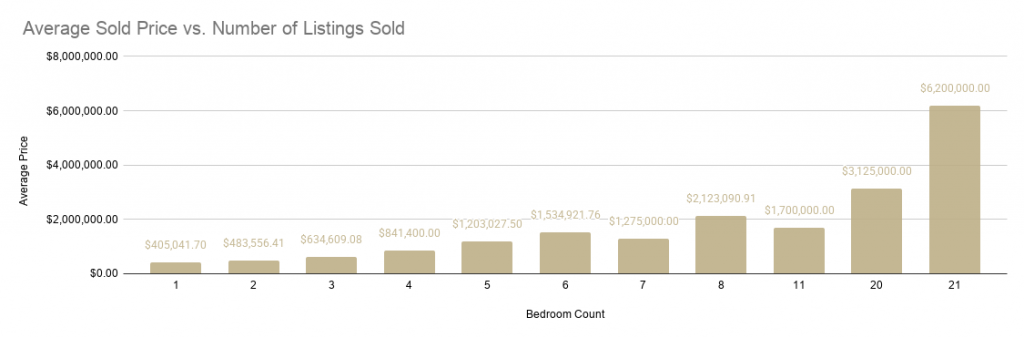
Bedroom count is one of the most commonly used filters in real estate searches, but by itself it doesn’t explain how the market behaves. When we group sold listings by bedroom count, clear differences emerge in sales volume, pricing, time on market, and rental performance.

These differences describe how, if at all, predictable outcomes are at different sizes.


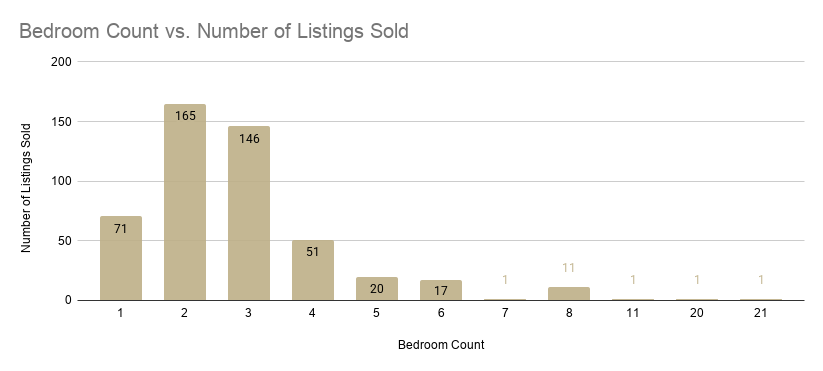
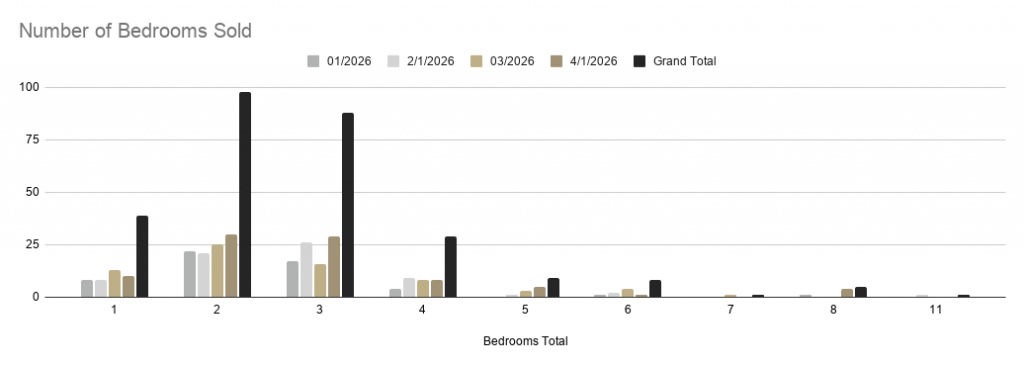
Sales volume was strongest in the 2–3 bedroom range, which accounted for the largest share of all closed listings.
Activity declined starting at four bedrooms and dropped more sharply as bedroom count increased beyond that point.

  • 2–3 bedroom homes represented the largest segment of the market
  • 4-bedroom homes continued to sell at a meaningful pace, but at less than half the volume of 2–3 bedroom homes
  • 5+ bedroom homes made up a much smaller share of total transactions
  • 7+ bedroom homes sold infrequently, often with only a handful of sales


How Bedroom Count Related to Time on Market

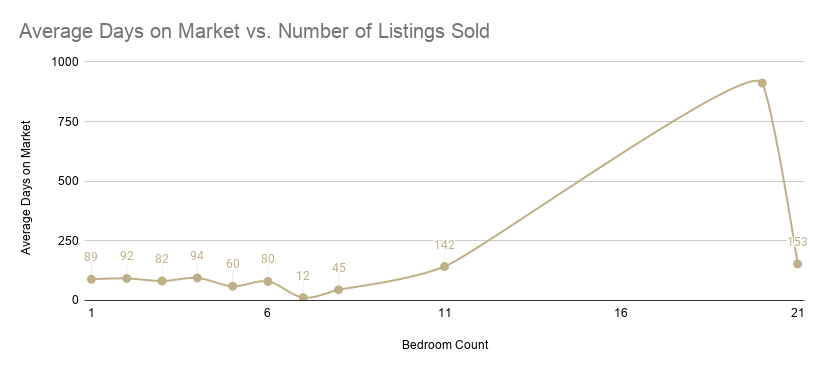
Median days on market remained relatively consistent through the mid-range bedroom counts.

  • 1–4 bedroom homes clustered tightly around similar median timelines
  • 5–6 bedroom homes showed modest increases in median days on market
  • 7+ bedroom homes showed wide variation, including both very short and very long timelines

This indicates that outcomes become less consistent as bedroom count increases and sales volume decreases.


Price Per Square Foot Changes With Size

Price per square foot declined as bedroom count increased, even as total sale prices rose.

    • Smaller homes consistently sold at higher price-per-square-foot levels
    • Larger homes sold for higher total prices, but at lower price-per-square-foot levels
  • Four- and five-bedroom homes often represented a midpoint where total price increased without the sharpest drop in price efficiency


Rental Performance Scales With Increasing Variability

Documented rental history** increased as bedroom count increased through the mid-range.

    • Median rental figures rose steadily from 1 to 6 bedrooms
  • Six-bedroom homes showed a significant jump in median rental history
  • Beyond six bedrooms, rental performance became uneven, with wide variation between properties

At higher bedroom counts, small sample sizes and property-specific factors had a greater impact on results. This makes category-level conclusions less reliable.


Why Medians Matter at Higher Bedroom Counts

Average figures widened significantly at larger bedroom counts.

  • Days on market averages increased sharply due to a small number of long-running listings
  • Rental averages were heavily influenced by individual properties
  • One or two sales could materially change the averages for a category

For this reason, median figures provide a more stable view of typical performance, especially where sales volume is thin.


What Changes as Bedroom Count Increases

Based on the sold data:

  • 2–4 bedrooms: highest liquidity and most consistent outcomes
  • 5–6 bedrooms: higher upside with narrower margins for pricing and positioning errors
  • 7+ bedrooms: outcomes become highly property-specific due to limited transaction volume

Bedroom count does not determine success on its own, but it changes how sensitive a property is to pricing, timing, and individual characteristics.


Understanding where a property falls within these ranges helps set expectations for pricing strategy, timelines, and risk.  


*Areas included in statistics are Bluff Mountain, Chalet Village, Cobbly Nob, Douglas Lake, Gatlinburg, Jones Cove, Kodak, New Center, Pigeon Forge, Pittman Center, Sevierville, Seymour, and Wears Valley. Includes Only properties that can be used as a short term rentals.

**This data is pulled from the GSM MLS. Not all properties that are rentals have documented rental income inside the MLS. 


2025 Smoky Mountain Real Estate: What the Sold Data Actually Shows

When we step back and look at every closed sale from 2025* a few things become very clear:

  • Buyers were active, but selective
  • Pricing accuracy mattered more than ever
  • Location and property type drove outcomes far more than headlines 


Pricing Accuracy & Market Speed

This was the defining theme of 2025. Homes priced correctly from the start behaved very differently than those that missed the mark.

Based on sold listings, properties that closed at or above their original list price overwhelmingly sold faster and with far less friction than those that required price corrections.

  • Homes that sold at or above original list typically closed within 30 days
  • Properties that sold below original list most often landed in the 120+ day range
  • Listings that ultimately sold below their original list price were far more likely to spend extended time on the market. Once pricing had to be adjusted, average days on market increased substantially.

This confirms what we saw anecdotally all year:  buyers were willing to act quickly, but only when pricing aligned with perceived value.


What Buyers Actually Bought 

Looking at total sales by property type, one category clearly dominated activity.

  • Cabins and single-family homes accounted for the majority of all sales
  • These property types also commanded the strongest price per square foot
  • Condos and specialty property types represented a much smaller share of total transactions 


Location Still Matters, But Not All Locations Perform the Same

When we break sales down by city single family homes show:

  • Sevierville led total sales volume, reflecting its mix of STR-friendly areas and accessibility 
  • Gatlinburg and Pigeon Forge commanded higher price per square foot, but generally took longer to sell 
  • Days on market were relatively consistent across the top cities, suggesting demand remained stable


Condos Told a Very Different Story

Condos behaved differently from single-family homes in nearly every metric.

  • Sales volume was significantly lower
  • Average days on market were higher
  • Price per square foot was more compressed
  • Performance varied sharply by city 

In short: condos were more price-sensitive and required sharper positioning to move.


New Construction vs Existing Homes

One of the more interesting takeaways from the data is that new construction did not automatically outperform existing homes.

  • New construction did command higher prices and higher price per square foot
  • However, days on market were effectively the same
  • Existing homes represented the vast majority of closed sales 

Buyers weren’t looking for “new”  they were looking for value, layout, and location.


Median Data Tells the Real Story

Averages can be skewed in a market like ours. Medians tell a cleaner story.

Looking at median performance by property type:

  • Single-family homes and cabins both showed strong median price-per-square-foot performance 
  • Condos lagged on both pricing and speed 
  • Days on market remained reasonable for properties aligned with buyer expectations 

This reinforces the broader theme of the year: buyers were intentional.


From a full-year perspective, 2025 looks like a healthy normalization year.

Pricing accuracy mattered more than ever.
Turnkey, well-located properties were rewarded.
Buyers took their time, but were still present. 
Sellers who adjusted expectations early did well.


This is what a sustainable market looks like after several overheated years, and it sets the stage for informed, confident decisions going forward.


*Areas included in statistics are Bluff Mountain, Chalet Village, Cobbly Nob, Douglas Lake, Gatlinburg, Jones Cove, Kodak, New Center, Pigeon Forge, Pittman Center, Sevierville, Seymour, and Wears Valley. Includes Only properties that can be used as a short term rentals.


December 2025: How the Smoky Mountain Real Estate Market Closed the Year

December is often assumed to be a slow month in real estate, but the numbers tell a very different story about how the Smoky Mountain market closed out 2025. 

Instead of winding down, December showed a market that was active, steady, and driven by informed buyers making thoughtful decisions.


Strong December Activity

The market recorded 151 residential sales totaling just over $109 million in volume in December 2025.

The average sales price came in at $724,158.
Average days on market settled at 82.
Price per square foot averaged $374. 

Compared to December 2024, sales were up 28 percent, total volume increased 27 percent, and days on market improved by 13 percent, while pricing remained essentially flat. 

This tells us that activity wasn’t driven by rising prices or urgency. Buyers were active, but disciplined, buying when the numbers made sense, rather than chasing inflated pricing.


Single-Family Homes Led the Close of the Year

Single-family homes continued to carry the market through December. 

A total of 136 single-family homes sold, also up 27 percent year over year, with an average sales price of $771,297. 

Days on market improved to 81, and nearly $105 million in single-family volume closed before year end. 

When sales increase while prices remain steady and homes sell faster, it’s a strong sign of buyer confidence paired with selectivity. 

Well-priced, well-maintained homes moved, while properties that stretched above market expectations took longer to find buyers.


What Price Per Square Foot Tells Us

One of the clearest signals in December was price per square foot. 

Residential price per square foot averaged $374, while single-family homes averaged $364, both lower than peak months earlier in the year despite strong sales activity. 

This shows buyers weren’t chasing size or luxury premiums. 

Instead, they focused on usable space, condition, and overall value, reinforcing that practical, turnkey homes were the most competitive as the year closed.


Condos saw 11 sales in December, with an average price of $305,181 and days on market around 90. 

While interest was present, buyers took more time, carefully weighing their options. 


Land sales held steady at 21 lots sold, but average pricing adjusted downward, and days on market remained higher.

Buyers were still active, but they negotiated more and approached long-term projects cautiously, favoring properties that offered immediate use and clearer value.


What December Tells Us Going Into 2026

December confirmed a recalibrated market. 

Buyers were present and sellers who priced realistically were rewarded. 

Homes that were ready to go continued to move. 

The Smoky Mountain market closed 2025 in a healthy, balanced position, setting the stage for a confident and steady start to 2026.